
Microwave Synthesis
Microwave synthesis is a method used mainly in chemistry and materials science where microwave radiation is used to heat and drive chemical reactions. It is mainly used to extract useful nutrients from mostly plants.
Instead of heating a reaction slowly on a hot plate or in an oil bath as is done in homes for domestic use, microwave synthesis uses microwaves (like in a microwave oven, but controlled) to heat the reactants rapidly and uniformly.
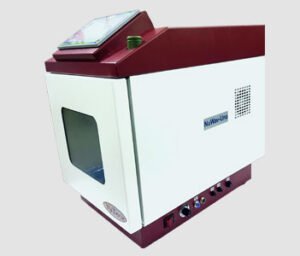
Microwave Synthesis Process
Microwave synthesis System
Microwave synthesis uses microwave electromagnetic radiation (usually 0.9–2.45 GHz) to heat chemical reactions directly by coupling energy into the reactants and/or solvent which is much more uniform. Instead of relying on thermal conduction from a hot surface, microwaves heat materials through dielectric heating.
Uses of Microwave Synthesis
Microwave Synthesizer
The working of process.
- Microwaves interact directly with polar molecules and ions
- Energy is converted into heat inside the reaction mixture
- This leads to fast, efficient heating compared to conventional methods
- Polar molecules and ions absorb microwave energy and convert it into heat very quickly.
- Heating is often faster and can be more selective than conventional oil-bath or furnace heating.
- Modern laboratory microwave reactors control temperature, pressure, stirring and safety interlocks.Why it’s usedMicrowave synthesis offers several advantages:
- faster reactions
- Uniform heating
- Higher yields and purity
- Energy-efficient and greener
- Highly controlled reaction conditions
Where it’s applied
- Organic synthesis (e.g., condensations, cyclizations, cross-couplings).
- Inorganic and materials chemistry (e.g., nanoparticle and metal-oxide syntheses).
- Preparation of MOFs, ceramics, and some polymerizations.
- Rapid screening and small-scale scale-up in medicinal chemistry and materials labs.
A reaction that normally takes 6–8 hours using conventional heating might finish in 10–20 minutes using microwave synthesis.
Microwave Synthesis Equipment manufacturers
- Use purpose-built laboratory microwave reactors (with pressure/temperature control).
- Do not use a household microwave for chemical reactions (risk of fire, pressure explosions, arcing with metals, poor control).
- Watch for pressure buildup, superheating, and arcing with metal-containing reagents. Scale-up needs careful engineering because microwaves penetrate only so far and heating can be nonuniform.
Limitations
- Non-uniform heating (“hot spots”) in some setups.
- Limited penetration depth for large volumes — scale-up can be challenging.
- Not all reaction mixtures absorb microwaves well (non-polar solvents need additives or special conditions).